October 1, 2026

We started our Loveland routes this summer with a stretch of clients in Mariana Butte and McKee Farm, and a pattern showed up right away. The homes we clean every two weeks fell into two camps. Some looked nearly as good on day thirteen as they did the morning we left. Others had the kitchen working against them within four or five days. Same cleaning frequency, noticeably different results. The difference was not magic. It was a handful of small habits done consistently between visits.
This post is for the second camp. If you are already paying for professional cleaning and want more mileage out of every visit, here is exactly what to do between appointments, in what order, and with what tools. No guessing, no over-cleaning. Just the things that actually prevent buildup from getting ahead of you.
The most common mistake we see is what I call spot-reactive cleaning. A spill happens, someone wipes it. A burner gets grimy, someone scrubs it. There is no routine, just responses to problems after they have already formed. This approach keeps the kitchen looking acceptable on most days, but it misses the slow-building residue that turns a quick wipe into a scrubbing project by the time we arrive.
Grease vapor from cooking coats surfaces you would not think to wipe. Cabinet hardware accumulates hand oils meal after meal. The area behind the stovetop collects food debris that bonds to the surface within a few days of heat exposure. None of this triggers an obvious visual alert. It just compounds quietly until a maintenance visit turns into a deep-clean-level job, and that costs more time for everyone.
The fix is a short, predictable routine. Ten minutes a day and twenty minutes on one day per week handles the vast majority of kitchen maintenance for most Loveland households.
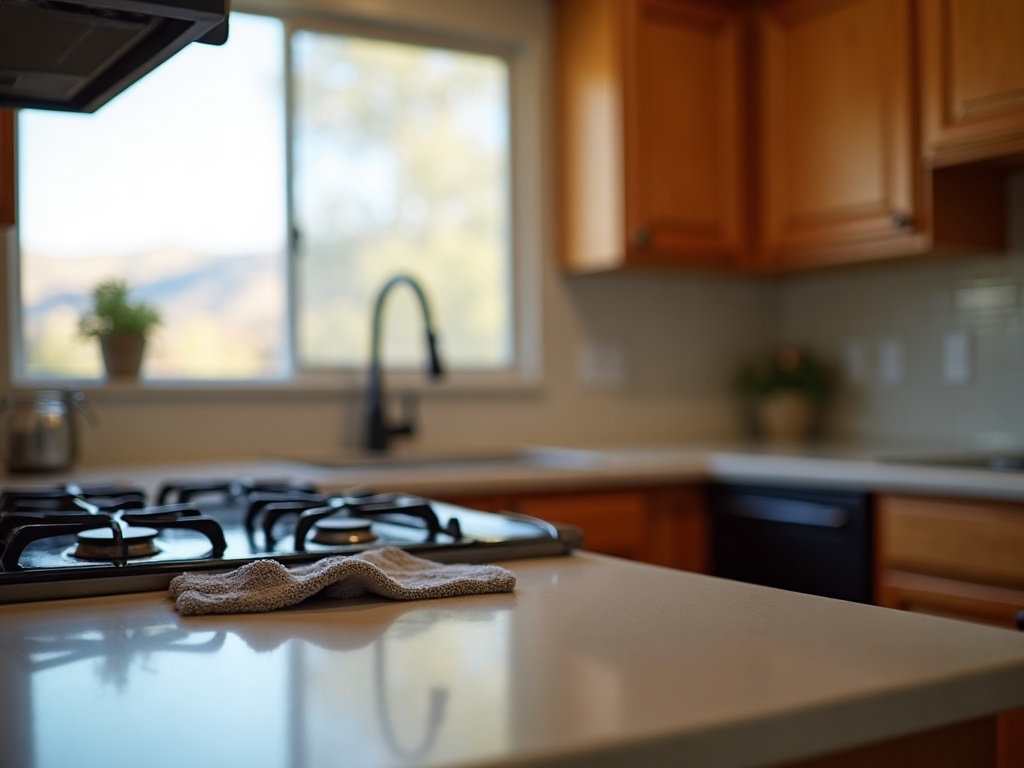
This is the single highest-impact habit in kitchen maintenance. Grease and food residue on a stovetop surface takes a few hours to bond into a harder film. Clean it the same night while it is still soft and a damp cloth handles it in two minutes. Wait two days and the same job takes five minutes and a degreaser. Wait a week and you are soaking the grates. The surface does not need to be sparkling every night. It needs to not be allowed to harden. A damp microfiber cloth with a small amount of dish soap is enough for most nights. Use it after the stovetop has cooled, not while it is still hot.
This one habit changes what our crew finds when we arrive on a biweekly schedule. A stovetop that gets wiped nightly needs a quick pass from us. A stovetop that has not been touched since the last visit needs real work. That time we save on the stovetop goes into other parts of the kitchen instead.
Countertop buildup in a kitchen happens through dozens of small contacts. Coffee drips, crumbs, water spots near the sink, cutting board residue, and cooking splash accumulate in a layer that is barely visible at any single moment but is clearly noticeable after a few days. Clearing the counter of everything and doing a full wipe before bed takes about three minutes. Doing it only when the counter looks dirty means the invisible layer has already been sitting there for days and has started to attract more residue.
Use a clean microfiber cloth, not the same sponge that wiped dishes. Kitchen sponges carry a bacterial load within a day or two of use that transfers to every surface they touch. A dedicated microfiber cloth rinsed and hung to dry between uses is cleaner and more effective on hard surfaces. We use microfiber on every kitchen surface we clean for this reason.
A sink full of dishes is not just an aesthetic problem. Standing water and food residue in a stacked sink creates an odor source, attracts fruit flies during Loveland's warmer months, and leaves a residue ring inside the sink basin that gets harder to remove the longer it sits. Running the dishwasher daily or every other day based on your household's load keeps the sink clear. A quick scrub of the sink basin two or three times per week with a non-abrasive cleaner handles the residue before it becomes a problem.
The drain area is the part people skip. Food particles that catch in and around the drain opening start to smell fast in a warm kitchen. A quick wipe around the drain rim with a cloth or paper towel after each dishwashing session takes ten seconds and prevents the odor source from forming. It is one of those micro-tasks that sounds unnecessary until you notice what builds up when you skip it for a week.
Cabinet pulls and handles in a kitchen are touched dozens of times per day. Each contact deposits a small amount of hand oil, food residue, and general kitchen grime. This accumulation is invisible at the individual contact level but becomes clearly visible under direct light after five to seven days in an active cooking household. A weekly wipe of all cabinet hardware with a damp microfiber cloth and a small amount of dish soap removes this layer before it builds into a sticky film.
The stovetop surround, meaning the area directly behind and beside the burners where backsplash meets stovetop, catches the highest concentration of cooking splash in the kitchen. It needs more than the nightly wipe of the cooking surface. Once per week, take a degreaser-dampened cloth to this zone and wipe it fully. In Loveland homes where cooking happens most nights, skipping this weekly step means our crew has to spend ten extra minutes on it that could go to the refrigerator or microwave interior instead.
The microwave interior is the most neglected surface in most home kitchens, including the ones that otherwise look clean. Splatter bonds to the interior cavity within hours of heat exposure. A 90-second reheat leaves residue that hardens into the surface quickly. The correct approach is a weekly wipe of the interior with a damp cloth, or a steam method: place a bowl of water with a tablespoon of white vinegar inside, run on high for three minutes, then let it sit for two minutes before opening. The steam loosens any bonded residue and the whole interior wipes clean in about a minute. Skip this for two or three weeks and it requires a dedicated cleaning product and real scrubbing time.
Kitchen floors in Loveland homes accumulate food particles, crumbs, and tracked-in grit faster than other rooms because of the foot traffic pattern between the garage entry, the back door, and the cooking area. Particles that sit on the floor get ground into the surface by foot traffic and bond to the floor material. On hard floors, this creates a micro-scratch pattern over time. On grout lines in tile, it packs in and turns gray.
A dry sweep or quick vacuum pass every two days prevents the grinding-in process. It takes three minutes. Waiting until the floor visibly looks dirty means the particles have already been working against the floor surface for days. Wet mopping should follow the dry pass, not replace it. Introducing a wet mop onto a floor that still has loose grit pushes debris into grout lines and across the surface rather than lifting it.
Kitchen trash cans develop an odor source from the residue that accumulates inside the can itself, not just from the bag contents. Food drips, moisture from produce scraps, and liquid that leaks through the bag liner collect in the bottom of the can and create an odor that persists even after a new bag goes in. Once per week, remove the bag, wipe the interior of the can with a disinfecting wipe or a cloth dampened with a small amount of all-purpose cleaner, and let it dry before inserting a new liner. In Loveland's warmer summer months, especially in kitchens that face south or west and warm up in the afternoon, this weekly wipe is necessary more than some people expect. The smell develops faster in a warm environment.
You do not need many products to handle kitchen maintenance between professional visits. You need the right few, kept accessible so the routine does not require any effort to start.
A dedicated stack of microfiber cloths kept in a kitchen drawer is more important than any specific product. Microfiber removes grease and food residue from hard surfaces without requiring heavy product saturation, and it does not leave the lint or streaking that paper towels create on stovetops and cabinet faces. We use microfiber on every surface we clean. Wash and replace them regularly. A microfiber cloth that has been used on grimy surfaces and thrown back into a drawer for a week is not a cleaning tool, it is a contamination source.
For degreasing, a plant-derived dish soap diluted in a spray bottle with warm water handles the stovetop, cabinet hardware, and backsplash in most kitchens. We avoid recommending spray products that contain quaternary ammonium compounds as the primary active ingredient for daily kitchen use. These are effective disinfectants, but daily application on food prep surfaces without thorough rinsing can leave a residue that builds up over time. For the non-food-contact surfaces in the kitchen, like cabinet exteriors and the stovetop surround, a conventional all-purpose cleaner is fine. For anything near food prep areas, a diluted dish soap solution is safer and just as effective for routine maintenance.
For the microwave steam method, white vinegar and water is all you need. It is not a disinfectant, but it loosens bonded residue effectively and eliminates the need for a chemical product in a confined space you use to heat food. Do not use abrasive scrub pads inside a microwave cavity. The coating on the interior surface scratches permanently and the scratches become collection points for future residue.
One product we avoid recommending for kitchen floors is any cleaner with a wax or oil additive marketed as a floor conditioner. These leave a film that builds up over multiple applications and turns dull and sticky over time. A pH-neutral floor cleaner on hardwood and laminate, and an appropriate tile cleaner on stone or ceramic, handles kitchen floors correctly without the buildup problem. Our post on what most people get wrong about cleaning hardwood floors covers this in detail if your Loveland kitchen has wood flooring.
The habits above keep the kitchen in a genuinely maintainable state between professional visits. They do not replace what a thorough professional clean accomplishes. There is a category of kitchen work that falls outside reasonable daily and weekly maintenance, and knowing that line helps you understand what to expect from each type of effort.
Interior oven cleaning is the clearest example. Baked-on carbon inside an oven requires a dedicated commercial oven cleaner, proper dwell time (30 minutes minimum for bonded residue), and real scrubbing effort. This is not a between-visits task for most households. For active cooking households in Loveland, adding an interior oven clean to a professional visit every two to three months prevents the oven from reaching a state where it becomes a major project.
Refrigerator interiors are similar. The gasket channels, under-crisper-drawer residue, and shelf supports collect material that a quick wipe does not reach. Once per professional visit cycle, or when residue is visible, add the refrigerator interior as a professional add-on rather than attempting it as a maintenance task that competes with daily routine.
The same applies to grout lines in tile floors and backsplash areas. A damp mop does not restore grout color once it has absorbed cooking residue and foot traffic grime. That requires a targeted grout cleaner applied with a stiff brush and specific dwell time. Our crews handle this on a rotating basis for clients on a recurring schedule rather than trying to address it every visit. Over time, it stays ahead of the problem.
Each team at Casabella averages three homes per day on a biweekly route. That pace works because clients who maintain their kitchens between visits mean each visit stays in the maintenance range rather than the recovery range. When the kitchen has been kept up, the professional visit goes farther and covers more of the home's other areas, not just the kitchen reset.
If the kitchen in your Loveland home has gotten ahead of the between-visits routine and needs a professional reset first, our Loveland house cleaning page covers how we approach first-time and deep clean visits in this market. For clients who want to understand the cost difference between a one-time deep clean and a recurring schedule, the post on recurring cleaning versus a one-time deep clean walks through the cost math clearly. And if you are preparing the kitchen and the rest of the home for a sale or listing, the post on preparing your Loveland home for sale with a professional cleaning covers the priorities that matter most to buyers.
For Loveland households where allergies are a factor, cooking residue and airborne grease particulate in the kitchen are part of the indoor air quality problem. The post on cleaning your home for allergies on the Front Range covers where kitchen cleaning fits into the broader allergy-reduction picture for Colorado homes. If you are also managing dust from Loveland's proximity to open space near Devil's Backbone, the post on why Front Range dust is different gives useful context on the local conditions.
You can reach us at 303-827-1251 during business hours and we will walk through what a first-time or recurring visit looks like for your specific Loveland home. You can also book your Loveland cleaning online and get a confirmed scope and price before anyone shows up.
The highest-impact habit is wiping the stovetop the same night you cook, before grease and food residue bonds to the surface. After that, a full counter wipe before bed, a quick drain-area wipe after dishwashing, and a dry sweep or vacuum of the floor every two days handles the majority of kitchen maintenance for most Loveland households. These tasks take ten minutes combined on a typical day. Weekly, add a degreaser pass on cabinet hardware and the stovetop surround, plus a steam clean of the microwave interior. That ten-plus-twenty routine keeps the kitchen in a state where a biweekly professional visit stays in the maintenance range rather than a recovery clean. Our Loveland house cleaning page has more on how we structure recurring service for homes in this market.
After the stovetop has cooled from cooking, wipe the surface with a damp microfiber cloth and a small amount of dish soap. This takes about two minutes and removes residue before it bonds into a harder film. Do not use the same sponge you use on dishes. Kitchen sponges carry a bacterial load quickly and transfer it to every surface they contact. A clean microfiber cloth rinsed and hung to dry between uses is more effective and more hygienic on stovetop surfaces. For sealed gas grates, a quick soak in hot soapy water once per week in addition to the nightly wipe prevents buildup from accumulating in the grate channels. If you have a smooth glass ceramic stovetop, avoid abrasive pads and use a cleaner made for that specific surface type, because abrasives scratch the coating permanently.
For most active Loveland kitchens, a dry sweep or vacuum pass every two days and a wet mop once per week between professional visits is a reasonable maintenance schedule. Always do the dry pass before the wet mop. Introducing a wet mop onto a floor with loose grit and food particles pushes debris into grout lines on tile and creates micro-scratches on hardwood and laminate over time. On tile floors with grout lines, the dry pass matters more because grout traps particles that a wet mop cannot lift once they are packed in. Loveland homes near Centerra or downtown that see more foot traffic through the kitchen from outside may need the dry sweep more frequently. The post on what most people get wrong about cleaning hardwood floors covers the floor-type specifics in more detail.
Weekly cleaning of the microwave interior is the right frequency for most active kitchens, not overkill. Splatter from reheating food bonds to the interior cavity surface within hours of heat exposure. After a week of regular use, the accumulation is enough that a simple wipe no longer handles it without some effort. The steam method handles this well with no chemical products: fill a microwave-safe bowl with water and a tablespoon of white vinegar, run on high for three minutes, let it sit two minutes with the door closed, then wipe. The steam loosens any bonded residue and the interior cleans in about a minute. Done weekly, this keeps the microwave in a state where the professional visit does not need to address it at all, freeing that time for other kitchen areas.
Interior oven cleaning, refrigerator interior cleaning, and grout restoration on tile floors and backsplash areas are the three kitchen tasks that fall outside routine between-visit maintenance for most Loveland homeowners. Interior oven cleaning requires a commercial oven cleaner, adequate dwell time, and real scrubbing effort for bonded grease. Attempting it as a quick daily or weekly task usually means incomplete results and exposure to strong product fumes. Refrigerator interiors need gasket cleaning, under-crisper-drawer work, and shelf support cleaning that is difficult to do thoroughly in the course of a daily kitchen routine. Grout lines require a targeted cleaner and stiff brush applied with specific dwell time to restore color after cooking residue and foot traffic have darkened them. All three are available as add-ons through our Loveland cleaning service, and each one is included or available on request when you book your visit online.
If your Loveland kitchen needs a professional baseline before the between-visit routine can hold, get that first visit on the schedule by booking online and tell us what the kitchen looks like. We will scope it accurately and give you a confirmed price before anyone walks through the door.