October 5, 2026

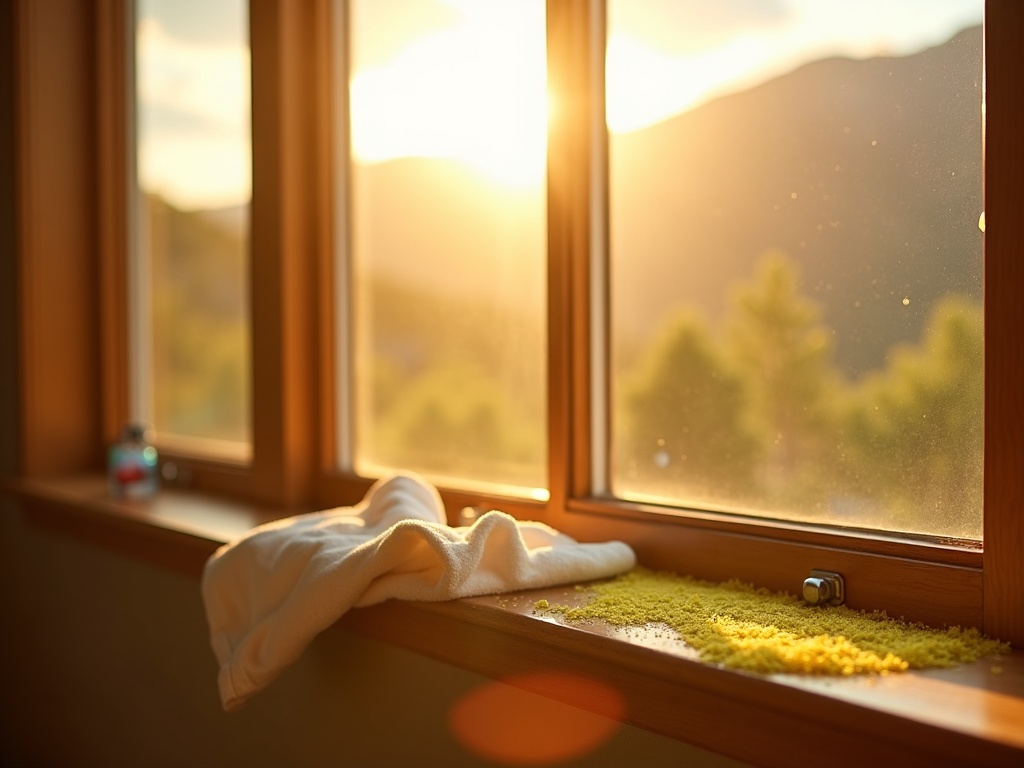
By the time Memorial Day weekend 2026 rolls around, every flat surface in a Colorado home that opened a window the week before is wearing a fine yellow-green coat. That's pollen, and it's running on a schedule that most homeowners don't actually know. Knowing which pollen is in the air this week, and which one comes next, is the difference between cleaning the same dust off the same coffee table every two days and getting ahead of it.
This is what summer pollen actually does to a Colorado home, when each kind peaks, and what to change in your cleaning routine for the four months when the air outside is working against you.
"Summer pollen" is three different pollens stacked back to back. Each one acts differently inside a home.
The dry windy stretch in late May 2026 is what kicks the whole thing into gear. Once those grass pollens are airborne, every door open longer than thirty seconds is bringing them inside. We've broken out the bigger picture in how Colorado's dry climate affects cleaning frequency if you want context for why semi-arid climates make pollen behave the way it does here.
Three things compound the problem on the Front Range:
If anyone in your home has reactive airways, the routine in our allergy-focused cleaning approach is the more detailed version of what follows. Homes near agricultural land have an additional layer to deal with, which is what we covered in the post on dust and pollen drifting off Mead's open farmland.
If you do nothing else, get a HEPA-rated air purifier sized for the bedroom and run it overnight. The bedroom is where you spend a third of your day breathing the same air, motionless. A purifier with a CADR rating that matches the room's square footage (look for AHAM Verified ratings) will pull settled-out pollen back through a filter every hour you're in bed. We've seen this single change drop morning allergy symptoms more than any other intervention. Budget around $200 to $400 for one that lasts.
Most homeowners vacuum, then dust, then wipe surfaces. During pollen weeks, reverse it. Pollen is electrostatic and sticks to fabric and elevated surfaces first. If you vacuum the carpet first, you're going to dust everything onto the carpet you just cleaned. Top to bottom, fabric to floor, in that order, with damp microfiber on hard surfaces.
If you're cooling the house with windows during a storm cool-down, keep two windows open on opposite sides of the home for cross-ventilation rather than every window in the house. Close them within 30 minutes of the temperature stabilizing. Then run the HVAC fan in "on" mode (not "auto") for an hour to circulate that incoming air through your filter. The next morning, run a damp microfiber pass over kitchen counters and any tables that were near an open window.
Wash sheets in hot water during peak grass-pollen weeks. Pollen on a pillowcase moves directly to your nose. If you dry laundry on a clothesline outside in May or June, stop. Use the dryer.
Pollen doesn't need a harsh chemical. A pH-neutral cleaner on a damp microfiber pad will remove it without aerosolizing dust the way a dry duster does. We use biodegradable, pet-safe products on every Colorado home we service because the goal during pollen season is to remove particulate, not to add another irritant to the air. We've also covered what most people get wrong about no-harsh-chemicals cleaning for anyone who's tried switching products and felt like the home didn't get as clean.
The base scope of what's covered in our standard residential service doesn't change during summer. The routine inside that scope does. From early May through mid-September, on every home we clean across the Front Range:
The pattern around open-space dust on the Front Range is its own animal layered on top of pollen, and homes near Boulder Open Space, the Niwot ag corridor, or the trail systems off Erie need a slightly different sequence. Most of house cleaning in Boulder County means accounting for both pollen and that fine soil dust at the same time during May, June, and July.
Bi-weekly is the right cadence for most Colorado homes between May and August. Weekly works if anyone in the home has heavy grass or ragweed allergies. Monthly is too long during peak grass-pollen weeks because pollen rebuilds on surfaces within five to seven days even in a closed-up home, and faster if windows are getting opened for the afternoon cool-down.
Yes, more than most homeowners expect. Indoor pollen levels track outdoor levels with a delay, and a closed home running its HVAC on a clean filter will hold lower indoor pollen than an open one. The trade-off is energy cost. A reasonable middle ground is to keep windows closed during the high-pollen morning hours (5 AM to 10 AM) and open them in the cooler late evening if pollen counts allow.
For the bedroom, yes. A HEPA purifier sized for the room captures pollen that has settled out of the broader airflow and gets re-suspended every time someone moves. It won't replace cleaning surfaces, but it will dramatically reduce what you breathe in overnight, which is when most allergy reactions consolidate.
Pets carry pollen on fur and paws. Wipe paws at the door with a damp cloth during peak grass-pollen weeks, and brush dogs outside, not in the mudroom. A weekly bath during May and June reduces what they're depositing on bedding and furniture. This single habit changes indoor pollen levels in dog-heavy homes more than any other adjustment.
Most can, if they're paying attention to the season. Ask whether they wet-clean during May through August, what filter changes they recommend, and whether they sequence rooms differently for sensitized homes. If the answer to all three is "we just clean," you're going to keep finding pollen film on your end tables. We talk through the seasonal piece on every quote.
If you're already a few weeks into pollen season and feeling it, the move is a deep clean to reset, then recurring service to hold the line through August. Book online with a few details about your Colorado home, or call 303-827-1251 if you'd rather walk through your home's situation first. Our team has answers to most of the quick FAQs about how we work on the FAQ page if you'd rather read up before you reach out.