November 9, 2026

This past spring, snowmelt hit harder than usual across Weld and Boulder Counties. We fielded calls from Longmont homeowners in the Hover and Mountain View neighborhoods whose basements had taken on water for the first time. Some had a few inches. Some had a slow seep along the foundation wall that had gone unnoticed for a week. Either way, the flood was over but the cleanup was just beginning, and most of them had no idea what that actually involved.
A wet basement in Colorado is not just a mopping situation. The dry Front Range climate creates a specific cleanup challenge: the visible water evaporates fast, which makes the basement feel dry before it actually is. That speed fools homeowners into thinking the problem is resolved. It is not. This post covers why Colorado's climate changes how you approach basement flood cleanup, what needs to happen inside the home room by room, and what we adjust in our process when we take on a flood-affected property.
Colorado's semi-arid climate, roughly 330 sunny days per year, dries surface moisture fast. That sounds helpful after a flood. In practice it creates a false sense of progress. The floor surface dries. The walls feel dry to the touch within a day or two. But moisture that wicked into drywall, subfloor, insulation, carpet padding, or wood framing does not dry at the same rate as surface evaporation. It stays trapped in porous materials well after the room feels normal.
That trapped moisture is where mold starts. Mold does not need standing water. It needs humidity above roughly 60 percent and an organic surface to attach to, and a wet-then-quickly-dried basement gives it exactly that. Drywall paper, wood framing, carpet backing, and cardboard from stored boxes all qualify. Colorado's low outdoor humidity can actually pull moisture out of the structure unevenly, leaving pockets of elevated humidity inside wall cavities even when the air in the room measures fine.
The other Front Range factor is the nature of the water source. Longmont flooding in spring often involves snowmelt or ground saturation pushing through foundation walls or floor drains. That water picks up soil, particulate, and organic material on its way in. It is not clean water from a broken supply line. Any porous material it contacted for more than 24 to 48 hours should be treated as contaminated, not just wet.
Carpet and carpet padding in a flooded basement need to come out. Carpet padding absorbs water like a sponge and holds it far longer than the carpet face above it. Even if the carpet surface feels dry within a day, the padding underneath is still saturated and actively growing microbial material. The same applies to drywall that wicked water above the flood line. Standard drywall absorbs moisture up the wall by capillary action, often 12 to 18 inches above the visible waterline. That section needs to come out, not dry in place. Leaving saturated drywall in place is the single most common mistake we see in flood-affected basements, because it looks fine from the surface once it dries but holds mold in the paper backing for months.
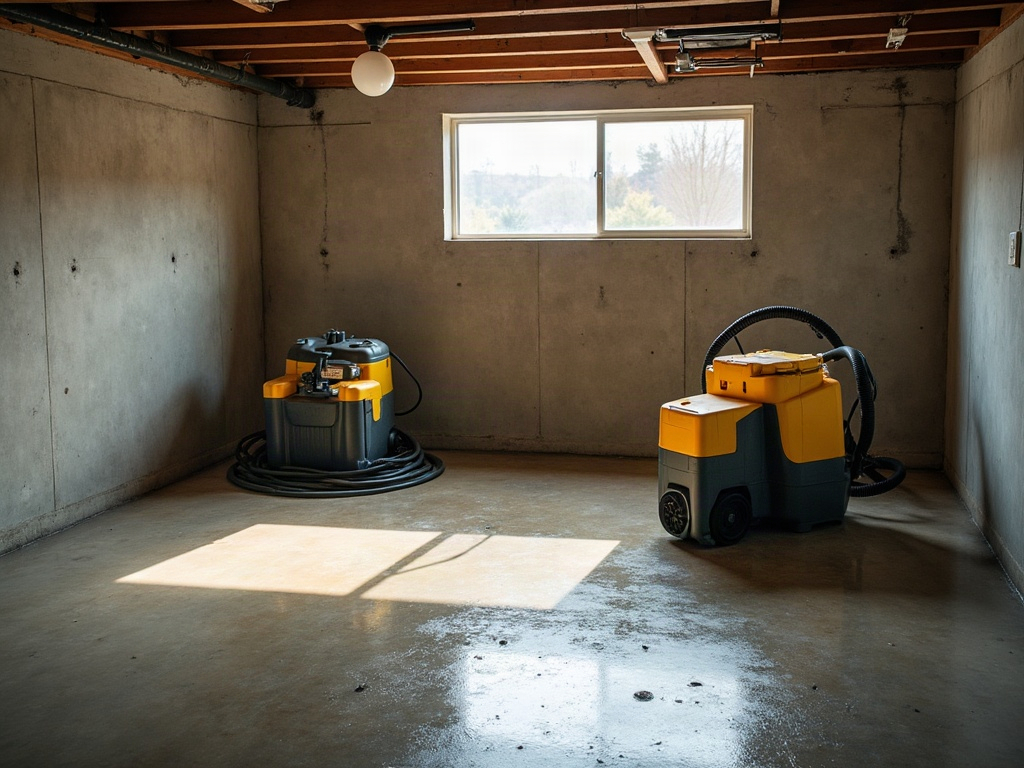
Fans and a dehumidifier running continuously for 72 hours minimum is the standard starting point on a flooded basement in Longmont. Residential dehumidifiers sold at home improvement stores are undersized for a flooded basement. They remove moisture from the air but cannot keep up with the rate at which porous materials release moisture back into the space. A restoration-grade dehumidifier pulls significantly more moisture per day. If you are handling this yourself and you are relying on a single residential unit, expect the drying timeline to extend well beyond 72 hours. A moisture meter is the only way to confirm when structural materials have reached a safe moisture content, typically below 16 percent for wood framing. Guessing by feel is not sufficient.
After the structure is confirmed dry, every hard surface that contacted flood water needs to be cleaned and disinfected before any repair or finishing work happens. Concrete floors, foundation walls, exposed framing, utility equipment, and any storage shelving that survived need a thorough wipe-down with a disinfecting product appropriate for the surface. For concrete, a diluted bleach solution (no more than one cup per gallon of water) addresses surface contamination, but only after the concrete is fully dry. Applying disinfectant to wet concrete is ineffective. The product cannot penetrate or work correctly in the presence of standing moisture.
Stored items that absorbed water need to be assessed individually. Cardboard boxes, books, paper documents, and fabric items that were submerged or heavily saturated for more than 24 hours are typically a loss. The cost of cleaning and drying them exceeds their replacement value in most cases, and they remain a contamination risk in the space. Hard plastic, metal, and sealed containers can be cleaned and dried. Furniture with fabric upholstery that contacted flood water follows the same assessment: if it sat in water for more than a day, replacement is usually the practical answer.
If flood water reached the furnace, water heater, or HVAC ducts in the basement, those systems need professional assessment before they are operated again. Running a furnace or air handler through duct work that contacted contaminated flood water distributes that contamination through every room in the house. This is not a cleaning task. It is a mechanical safety issue. Have a licensed HVAC technician inspect the system before you run it. The duct work itself, if it contacted contaminated water, may need to be replaced rather than cleaned depending on the material and extent of saturation.
Flood cleanup generates significant particulate. Debris from wet materials being removed, dust from drywall cuts, and fine sediment that dried on concrete surfaces all become airborne during the cleanup process and migrate upstairs through the home. Once the basement scope is complete, the living areas above it need a thorough cleaning, particularly floors, baseboards, and any HVAC registers that were running during the work. In Longmont homes in the Prospect neighborhood with open floor plans and central HVAC, this upstairs distribution of basement particulate is more pronounced than in homes with closed stairwells.
When Casabella takes on a post-flood cleaning in Longmont, the scope differs from a standard residential clean in a few specific ways. The biggest factor in a cleaning quote is not square footage. It is the number of bathrooms, the presence of pets, and how long it has been since the home was last professionally cleaned. For flood work, the equivalent variables are how long the water was present, what type of water it was, and what materials it contacted before cleanup began. Those factors determine the scope more than the room count does.
We do not perform structural drying or mold remediation. That work requires licensed restoration contractors with industrial equipment and, in Colorado, specific contractor certifications for mold remediation work. What we do is the post-drying, post-remediation cleaning scope: the hard surface disinfection after the structure has been confirmed dry, the thorough cleaning of the living areas above the affected space, and the detail work on surfaces that contractors leave behind after repair work is complete.
Post-flood cleaning also overlaps with post-construction cleaning in practice. Once drywall is replaced, flooring is reinstalled, and the basement is reassembled after flood damage, there is a layer of fine construction dust on every surface in the space. Our post on how to clean after a renovation before you move back in covers why post-construction dust behaves differently than regular household dust and what it takes to actually remove it rather than redistribute it. That same approach applies to a basement that has been fully rebuilt after a flood.
For the upstairs portion of a flood-affected home, we follow the same top-to-bottom sequence we use on any thorough clean: high surfaces first, floors last, with product choices matched to the surface type. If the HVAC was running during the cleanup period, the dust distribution through the home is heavier than usual and the clean takes longer to complete properly. That time difference is real and it shows up in the quote. You can reach us at 303-827-1251 to talk through the specific scope of your home before you submit anything in writing.
On the floor question specifically: flooded basements in Longmont's older neighborhoods sometimes have original hardwood or engineered wood on the basement level that the homeowner wants to salvage. If hardwood flooring has been submerged or exposed to prolonged moisture, no cleaning product addresses the structural damage. Cupping, swelling, and finish separation are mechanical responses to moisture in wood, not contamination issues a cleaner can resolve. Whether that flooring is salvageable is a question for a flooring contractor, not a cleaning company. What we can clean is the surface layer of residue after the floor has been assessed and confirmed structurally intact. Our post on what most people get wrong about cleaning hardwood floors explains why moisture is the primary risk factor for wood floors in Colorado's dry indoor environment, which is relevant whether the moisture came from a flood or from cleaning products applied incorrectly afterward.
For Longmont homeowners who want to understand the full scope of what our residential cleaning covers before and after a project like this, the Longmont house cleaning page outlines our approach for this community. The services page covers what each service level includes so you can compare options before deciding what fits your situation. And if you have questions about how dust, particulate, and seasonal conditions affect homes in this area more broadly, our post on how Colorado's dry climate affects how often you should clean your home gives useful context for understanding why Front Range conditions create different maintenance demands than most homeowners expect.
For homes near Mead, Berthoud, or Erie that see agricultural dust and post-construction particulate on top of the standard flood recovery scope, our posts on how dust from Mead's open farmland affects your home and dealing with post-construction dust in Berthoud's new neighborhoods cover the specific particulate challenges those communities deal with that compound the post-flood cleanup scope.
Surface feel and air conditions are not reliable indicators of structural dryness after a basement flood in Colorado. The Front Range's low ambient humidity dries surface materials quickly, which makes a basement feel dry while moisture is still trapped in drywall, wood framing, subfloor, and concrete. The only accurate method is a moisture meter applied directly to structural materials. Wood framing and subfloor should read below 16 percent moisture content before any repair or finishing work begins. Drywall should read at or near its pre-flood baseline. Concrete floors can read higher for longer due to the material's density. If you do not have a moisture meter, a licensed restoration contractor can assess structural moisture levels before you proceed with repairs or cleaning.
Yes, and faster than most homeowners expect. Mold growth on organic materials like drywall paper, carpet backing, and wood framing can begin within 24 to 48 hours of water contact in conditions with elevated humidity. Colorado's dry outdoor air does not prevent this because indoor humidity in a flooded basement stays elevated well above the 60 percent threshold mold needs, even in a climate with low ambient humidity. The dry air outside can actually create uneven drying inside wall cavities, leaving pockets of elevated moisture that support mold growth even after the room air feels normal. Any porous material that contacted flood water for more than 24 to 48 hours in a Longmont basement should be assessed for contamination before it is left in place.
Carpet padding that contacted flood water should be removed regardless of how dry it appears. Standard drywall that wicked water above the visible flood line needs to come out. Cardboard boxes, paper documents, and books that were submerged or heavily saturated for more than a day are typically not worth attempting to restore. Fabric upholstery on furniture that sat in water for more than 24 hours is usually a practical loss. Hard plastic containers, metal shelving, and sealed storage can be cleaned and dried. The general threshold is this: if the item is porous, absorbed contaminated water, and sat wet for more than 24 hours, the cost of proper cleaning and the contamination risk usually exceed the item's value. When in doubt, the replacement cost of most stored basement items is lower than the mold risk of keeping them.
Not entirely. Structural drying, mold remediation, and HVAC assessment after a basement flood require licensed restoration contractors and, in Colorado, contractors with specific mold remediation certifications for any work that involves removing mold-affected materials. A cleaning company handles the scope after the structure is confirmed dry and any mold-affected materials have been removed: hard surface disinfection, cleaning of living areas above the basement that collected dust and particulate during the work, and post-repair cleaning once contractors have finished rebuilding the space. If you are unsure whether your basement cleanup requires a remediation contractor or a cleaning company, the answer depends on how long the water was present, what it contacted, and whether any mold growth is visible. When those questions are unclear, start with the remediation contractor assessment.
Post-flood cleaning scope in Longmont varies significantly depending on the size of the affected area, how much of the home above the basement was impacted by dust and particulate during cleanup, and whether the cleaning follows restoration contractor work that left a layer of construction dust throughout the space. For the upstairs living areas of a standard 3-bedroom Longmont home after basement flood work, a thorough professional cleaning typically runs in a range comparable to a deep clean, which for this market is roughly $200 to $350 depending on condition. If the scope includes post-repair construction dust throughout the home and detailed cleaning of the basement hard surfaces after restoration, the total runs higher. The most accurate number comes from describing the specific condition of the home before booking, not from a square-footage estimate alone.
If your Longmont home has gone through a basement flood and you need a team that understands the full post-flood cleaning scope, submit your home details through our booking form and we will confirm what the work actually involves before anyone shows up.