
October 12, 2026

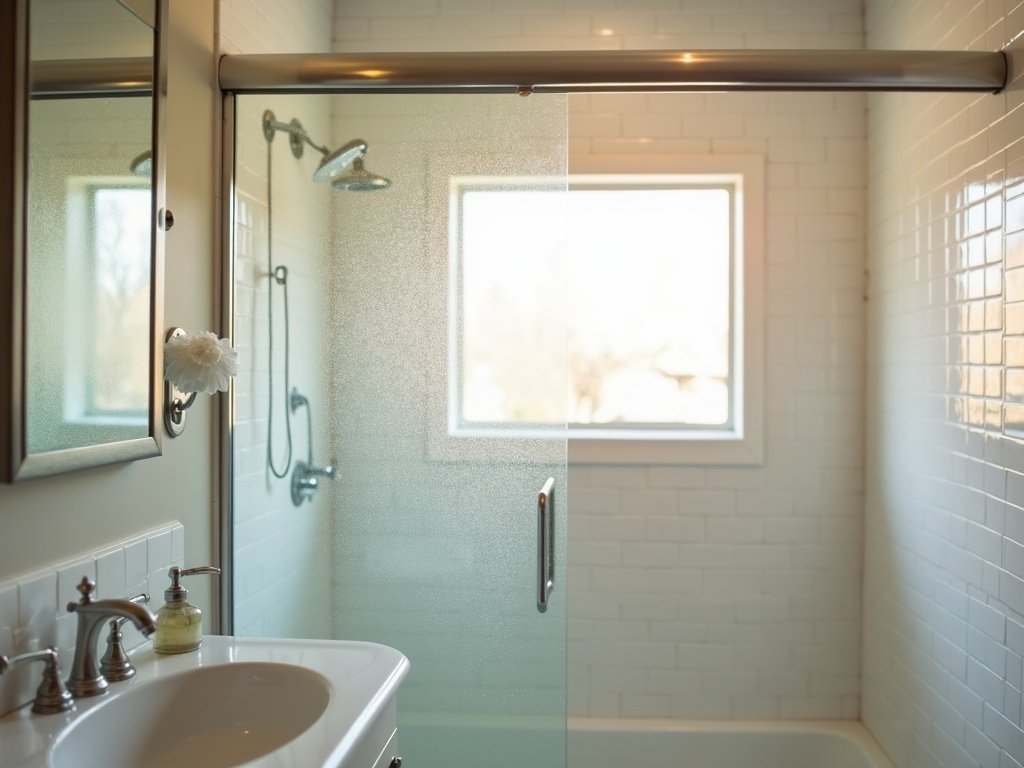
Over the past 58,000 home cleanings logged in our booking records since 2003, one complaint shows up more consistently than almost any other in Colorado homes: the white, chalky film that builds up on shower glass, faucets, and tile no matter how often people wipe things down. Hard water stains are not a cleanliness problem. They are a chemistry problem, and most of the products people reach for first do not solve it.
Colorado's Front Range water supply runs moderately to significantly hard depending on your municipality. Longmont, Erie, Broomfield, and Loveland all pull from sources with measurable calcium and magnesium content. That mineral load deposits on every surface water touches. The drier the Colorado air, the faster the water evaporates and the more concentrated the mineral residue left behind. Our teams see it on every job, in every city we serve.
This post covers exactly how to remove hard water stains from the surfaces they hit most, what products actually work and why, and where DIY effort stops being worth the time you put into it.
The most common mistake we see is reaching for an all-purpose spray cleaner and a scrub pad. This approach moves the mineral deposit around and may reduce its visibility slightly, but it does not dissolve it. Hard water scale is calcium carbonate, and calcium carbonate does not respond to neutral or alkaline cleaners. It responds to acid.
Scrubbing without the right chemistry makes things worse on certain surfaces. On shower glass, aggressive scrubbing without an acid-based cleaner etches the glass surface and creates micro-scratches that trap future deposits more aggressively. On chrome fixtures, abrasive pads leave scratches that dull the finish permanently. On natural stone tile like travertine or marble, which shows up in some of the older homes we clean in Old Town Louisville and North Boulder, an acid cleaner is the wrong choice because it attacks the stone itself. The mistake is using the same approach on every surface regardless of material.
Know the surface before you pick the product. That is the rule that prevents most of the damage we see when clients have been working on these stains themselves before calling us.
Glass shower enclosures, chrome or stainless fixtures, ceramic or porcelain tile, grout lines, and natural stone all require different approaches. Light staining (a faint white film that appeared within the last few weeks) responds to milder acid solutions like diluted white vinegar. Heavy staining (thick, opaque white or gray crust that has built up over months) requires a dedicated descaling product with a stronger acid content and a longer dwell time.
Natural stone, including travertine, marble, and limestone, is acid-sensitive. Even white vinegar will etch these surfaces. If your home has natural stone tile or countertops, use a cleaner specifically formulated as pH-neutral and stone-safe. Bar Keepers Friend is not safe on natural stone despite being one of the most effective hard water removers on other surfaces. Check your tile before you spray anything.
For glass shower doors and chrome fixtures with moderate to heavy calcium buildup, CLR (Calcium, Lime, and Rust Remover) is the product we recommend most consistently. It contains a blend of lactic acid and gluconic acid that dissolves calcium carbonate without requiring heavy mechanical scrubbing. Apply it directly to the surface, let it sit for two minutes minimum, and then wipe. Do not let CLR dry on the surface before wiping. Once it dries, you have to reapply.
For lighter buildup or routine maintenance between visits, a 50/50 mix of white vinegar and water in a spray bottle works on glass and ceramic tile. Spray, let it sit for five minutes, then wipe with a microfiber cloth. The acid content in vinegar is lower than CLR, so it needs longer dwell time to do the same work. Do not heat vinegar in a microwave and apply it warm hoping to speed up the process. Warm vinegar on glass can create thermal shock on older shower enclosures and has no meaningful benefit on the chemistry.
For ceramic and porcelain tile with heavy scale, Bar Keepers Friend in its powder form (oxalic acid base) applied as a paste with a damp cloth handles deposits that vinegar cannot touch. Apply, let it sit two minutes, scrub lightly with a non-scratch pad, rinse fully. This is our go-to for tile surfaces where CLR would be too aggressive or where the grout lines need attention alongside the tile face.
Grout lines in bathrooms accumulate mineral deposits, soap scum, and mildew at the same time. A product that handles hard water on tile may not do much for a grout line that has been darkening for months. For grout lines, a grout-specific cleaner applied with a stiff-bristle grout brush and a two-to-three minute dwell time is the correct approach. Scrubbing immediately without dwell time requires three times the mechanical effort for the same result.
After cleaning, rinse grout lines with clean water and dry them thoroughly. Leaving moisture in grout channels in Colorado's dry indoor air is not usually a mold risk the way it would be in a humid climate, but leaving cleaning product residue in grout channels without rinsing leaves a sticky film that attracts new deposits faster. Rinse everything you apply, on every surface.
Hard water deposits inside faucet aerators and showerhead nozzles are not visible from the outside, but they reduce water flow and create a spray pattern that deposits mineral residue unevenly across adjacent surfaces. In Boulder County and Broomfield homes especially, where the water hardness runs on the higher end of the Front Range range, aerators can become fully clogged within six to twelve months without maintenance.
Remove faucet aerators by unscrewing them by hand or with pliers wrapped in a cloth to avoid scratching the chrome. Drop them in undiluted white vinegar for 30 minutes. For showerheads you cannot easily remove, fill a plastic bag with white vinegar, tie it around the showerhead with a rubber band so the nozzle face is submerged, and leave it for 30 to 60 minutes. Scrub the nozzle face with an old toothbrush after soaking, then run hot water through the head for one minute to flush the loosened deposits. Restored flow and an even spray pattern confirm the mineral buildup has cleared.
Shower glass staining happens in layers. The outermost layer is soap scum, which is a combination of body oils, soap residue, and minerals. Below that is the actual mineral deposit bonded directly to the glass. Most products clean the soap scum layer and leave the mineral deposit largely intact, which is why the glass still looks hazy after cleaning.
The correct sequence is to clean the soap scum first with an alkaline cleaner or dish soap, rinse fully, then apply the acid-based descaler (CLR or a comparable product) to the mineral layer underneath. Two-step cleaning takes more time, but it is the only approach that actually restores the glass to clarity rather than just improving it slightly. After both steps, dry the glass completely with a microfiber cloth. Air drying leaves water spots from the cleaning solution itself and starts the buildup cycle again immediately.
Cleaning hard water stains is the reactive task. Slowing the rate at which they return is the proactive one. On shower glass, a hydrophobic glass sealant (Rain-X Original applied once every two to three months) causes water to bead and run off the glass surface rather than sitting and evaporating into a mineral film. This does not eliminate deposits entirely in Colorado's hard water environment, but it meaningfully extends the time between heavy cleaning sessions.
On chrome fixtures, a thin layer of car wax applied after a thorough descaling and drying session creates a protective barrier that repels water and reduces the rate of deposit formation. This is not a commonly known maintenance step, but it is one our crews recommend to recurring clients whose fixtures are prone to rapid resoiling. Apply a small amount, let it haze, and buff off with a clean microfiber cloth. Do not apply to the water outlet areas of faucets or showerheads.
In Colorado homes, weekly maintenance wiping of shower glass and fixtures with a diluted vinegar solution takes about three minutes per bathroom. Done consistently, it prevents the mineral deposits from progressing past the light-staining stage where a simple acid wipe handles everything. Skipping this for three to four weeks in a hard water area puts you back into the heavy descaling territory where dwell time and more effort are required.
The single most effective daily habit for shower glass is a squeegee pass after every use. A squeegee removes 80 to 90 percent of the water that would otherwise evaporate and leave a mineral film. Squeegees cost under ten dollars. In Longmont, Loveland, Broomfield, and every other Front Range city we serve, this is the lowest-effort, highest-impact habit for homeowners fighting hard water buildup on shower glass.
CLR is the most versatile hard water product for general bathroom and kitchen surfaces in Colorado homes. It handles glass, chrome, ceramic, and porcelain without requiring heavy scrubbing. Follow the label contact times precisely and rinse fully after use.
Bar Keepers Friend powder works well on porcelain sinks, ceramic tile, and stainless steel surfaces. It handles rust stains alongside mineral deposits, which matters in some older Longmont and downtown Boulder homes where iron content in the water stains sinks and tubs with an orange-brown tinge alongside the white calcium. Do not use it on natural stone, coated glass surfaces, or polished chrome that shows any existing fine scratches.
We avoid recommending Tilex Soap Scum Remover as a standalone hard water treatment. It is formulated primarily for soap scum and does not have sufficient acid content to dissolve significant calcium carbonate deposits on its own. It is a fine maintenance product for light surface residue, but it does not do what most Colorado homeowners actually need when they think they have a soap scum problem and actually have a mineral deposit problem underneath it.
For natural stone surfaces (travertine tile, marble vanity tops, limestone accents), the only safe product category is a pH-neutral stone cleaner. Granite Gold Daily Cleaner and Method Daily Granite Cleaner are both appropriate for routine use on natural stone in bathrooms. For mineral deposits specifically on natural stone, a poultice method using baking soda paste applied with plastic wrap and left for 24 hours is a gentler approach than any acid product. If the deposits are severe enough that the poultice method is not making progress, that is a professional job, not a DIY task.
Microfiber cloths matter more than most people expect. A microfiber cloth used damp on a cleaned surface removes the dissolved mineral residue that the cleaner has just loosened. A paper towel or cotton rag leaves lint, smears, and often pushes residue back into the surface rather than lifting it. We use microfiber on every bathroom surface we clean, including glass, fixtures, tile, and countertops. Keep a dedicated set in the bathroom and wash them regularly. A microfiber cloth that has been used on mineral deposits and set aside without washing becomes a deposit-transfer tool by its next use.
If managing hard water buildup in your bathrooms and kitchen feels like a full-time job, Colorado's dry climate is part of the reason. The way water evaporates quickly in low-humidity conditions accelerates deposit formation on every surface it contacts. Our post explains why Front Range homes need attention at a different frequency than homes in other climates.
For light to moderate hard water buildup that has accumulated over a few weeks, the steps above handle it well. Most homeowners who follow this process consistently find they can stay ahead of the problem between professional visits.
Heavy buildup that has been left untreated for six months or longer is a different situation. At that stage, the mineral deposits have bonded to the glass surface at a molecular level and created a texture that no household acid product will fully reverse in a single application. Some deposits in this category require multiple treatment sessions over several days, or professional-grade descaling products that are not sold in retail channels. On shower glass that has reached this stage, you may be looking at glass restoration rather than cleaning.
The other situation where professional cleaning makes sense is any home where hard water staining has progressed in multiple rooms simultaneously. If the master bath, the guest bath, and the kitchen fixtures all need significant descaling work, a professional visit with the right products and a systematic approach handles it faster and more completely than piecemeal DIY work. Our teams carry CLR, professional-grade tile descalers, and the tools to address this kind of job efficiently across a whole house in a single visit.
We also see situations in homes near Anthem Highlands in Broomfield and newer developments in Erie and Berthoud where builders installed frameless glass shower enclosures with minimal factory coating. These enclosures stain faster than standard glass because there is no durable hydrophobic layer from the factory. If you moved into a newer construction home and are finding the shower glass stains within weeks of cleaning it, the solution is applying a glass sealant, not cleaning more aggressively.
For a broader picture of what our cleaning scope covers in bathrooms and how we handle hard water-specific issues as part of a recurring visit, the post on what most homeowners skip when cleaning bathrooms covers the areas that get overlooked most consistently. Our services page has the full scope of what we address during both deep clean and maintenance visits across all the cities we serve.
If your home is in a heavy-staining cycle and you want a professional baseline reset before taking over maintenance yourself, our post on deep clean versus recurring service costs walks through what that first professional visit typically runs and how it compares to an ongoing schedule. For homes in Loveland and Erie that deal with significant dust alongside hard water, the posts on Front Range dust and open farmland dust in Mead give useful context on the full cleaning picture in those markets. You can reach us directly at 303-827-1251 during business hours to walk through what your home specifically needs.
Colorado's Front Range water supply is moderately to significantly hard depending on your city. Longmont, Erie, Broomfield, Boulder, and Loveland all have measurable calcium and magnesium content in their municipal water. When water evaporates off a surface in Colorado's dry, low-humidity climate, the minerals stay behind as a white or gray film. Because Colorado averages around 330 sunny days per year and indoor humidity runs low, water evaporates faster here than in humid-climate states, which means deposits form more quickly. Every shower use, every faucet drip, and every glass of water that sits on a countertop leaves a small mineral residue. Over weeks and months, that adds up to the chalky buildup most Front Range homeowners recognize. The Casabella services page covers how we address hard water buildup as part of regular bathroom cleaning across all the cities we serve.
CLR (Calcium, Lime, and Rust Remover) is the most consistently effective retail product for hard water stains on shower glass in Colorado homes. It contains lactic and gluconic acids that dissolve calcium carbonate without requiring heavy scrubbing. Apply it directly to the glass, let it sit for two minutes, and wipe with a microfiber cloth before it dries. For glass with heavy buildup that has been left untreated for several months, you may need multiple applications. After cleaning, apply a hydrophobic glass sealant like Rain-X Original every two to three months to slow the rate of new deposit formation. In Colorado's hard water environment, the sealant step makes a meaningful difference in how quickly the glass re-stains between cleanings. Avoid abrasive scrub pads on glass as they create micro-scratches that trap future deposits.
White vinegar works well for light to moderate hard water stains on ceramic tile, porcelain fixtures, and chrome faucets. Use a 50/50 mix of white vinegar and water, spray it on the surface, and let it sit for at least five minutes before wiping. The lower acid concentration in vinegar compared to dedicated descalers means it needs longer dwell time to do the same work. For heavy buildup that has accumulated over months, vinegar alone may not be sufficient and a product like CLR or Bar Keepers Friend will be more effective. Do not use vinegar on natural stone surfaces including travertine, marble, or limestone tile. The acid will etch the stone surface permanently. On natural stone, use only a pH-neutral stone-safe cleaner. This is a common mistake in older Front Range homes that have natural stone tile in master bathrooms.
The most effective daily habit is a squeegee pass on shower glass after every use. A squeegee removes most of the water that would otherwise evaporate and leave mineral deposits, which slows buildup significantly. After cleaning fixtures and glass thoroughly, apply a hydrophobic sealant to glass and a thin layer of car wax to chrome fixtures to create a protective barrier. Do a weekly maintenance wipe of shower glass and fixtures with diluted white vinegar to catch early-stage deposits before they bond into heavier scale. In Colorado's dry climate, water evaporates quickly and deposits form faster than in humid states, so the maintenance interval needs to be shorter than what people who moved here from other regions might expect. Consistent weekly wiping takes about three minutes per bathroom and prevents the heavy descaling sessions that require significantly more time and effort.
Call a professional when hard water deposits have built up for six months or longer without treatment, when multiple bathrooms and kitchen fixtures need descaling at the same time, or when the shower glass has a permanently hazy or textured appearance that household products are not clearing. At that stage, deposits have bonded deeply to surfaces and may require professional-grade descaling products and multiple treatment passes to address properly. Severe cases on shower glass may require glass restoration rather than standard cleaning. Newer construction homes in Erie, Berthoud, and Broomfield with frameless glass enclosures are particularly prone to rapid staining because factory coatings on builder-grade glass are minimal. A professional visit resets the baseline and our crew can advise on the right maintenance products and schedule for your specific water conditions. You can book a visit online or call us directly to walk through your home's situation before scheduling.
If your Colorado home has hard water buildup that has gotten ahead of routine maintenance, let us handle the reset. Schedule your first visit at casabellacleaning.co/book-your-cleaning and we will scope the job to your home's actual condition before anyone shows up.