October 12, 2026


We wrapped up a full week of Longmont routes in mid-July and noticed something consistent across the Prospect and Hover neighborhoods. Homes on the same biweekly schedule looked dramatically different on day twelve. Some looked like we had been there recently. Others had a week's worth of dust on the shelves, a kitchen that needed real work, and bathrooms that had slipped. The difference was not luck. It was a handful of daily and weekly habits that either happened or did not.
If you are already on a recurring cleaning schedule and want to get more mileage out of every visit, this post is for you. No elaborate routines. Just the specific tasks, in the right order, that prevent buildup from outpacing your professional cleaning schedule.
The most common mistake we see between visits is what I call task drift. People clean reactively. Something looks bad, they wipe it. Something smells, they address it. There is no consistent sequence, no room-by-room order, and no attention paid to the surfaces that accumulate slowly without looking visibly dirty.
The problem with reactive cleaning is that it misses the slow-build zones. The dust that settles on ceiling fan blades and picture rail ledges. The soap film that creeps up the shower walls a little each day. The countertop grime that accumulates from dozens of small contacts before it becomes visible under overhead light. By the time any of these look dirty, they are already a job that takes effort to reverse.
A defined daily routine of about ten minutes and a weekly pass of twenty minutes handles the vast majority of between-visit maintenance for most Longmont households. That is the realistic scope. Not hours, not heroic effort. Just a short, consistent sequence applied before problems compound.
Our teams follow a top-to-bottom, left-to-right cleaning sequence in every room because dust and debris fall downward. Apply the same logic between visits. Start with ceiling fan blades, the tops of door frames, and the upper faces of cabinets or bookshelves. Work down to mid-level surfaces, then address the floor last. If you wipe counters and then disturb a dusty fan blade overhead, you are cleaning the counters twice.
In Longmont, this matters more than in humid-climate markets. The Front Range's semi-arid conditions keep fine particulate airborne longer before it settles. Homes near downtown Longmont and the older Mountain View neighborhoods see noticeable dust accumulation within three to four days of a cleaning. A weekly pass with a microfiber cloth on upper and mid-level surfaces keeps that accumulation from hardening into the kind of film that takes real effort to remove.
A dry microfiber cloth is the right tool here. Electrostatic charge in microfiber grabs fine particles rather than pushing them. A damp cloth on dusty surfaces creates a paste that smears instead of lifting. Save the damp wipe for surfaces that have actual residue, not just settled dust.
The bathroom is the room where between-visit maintenance pays off the most. Longmont's water supply carries a measurable mineral content, and every water contact leaves a small deposit that becomes visible scale within days. A sixty-second daily wipe of the sink basin, faucet handles, and mirror after morning use prevents that mineral layer from bonding to the surface.
For the shower, a squeegee pass on the glass after every use is the single highest-impact habit in the entire house. It removes most of the water that would otherwise evaporate and leave calcium deposits on the glass surface. A squeegee costs under ten dollars and takes about twenty seconds to use. Combined with a quick spray of diluted white vinegar on the walls twice per week, this routine keeps shower glass and tile in a condition where our professional visit is maintaining a clean surface, not trying to reverse weeks of mineral buildup.
The toilet does not need daily attention, but a quick wipe of the exterior including the tank top, seat hinges, and base once or twice per week prevents the residue that builds up in those areas and is easy to miss during a fast visual check.
Grease and food residue that sits overnight bonds to stovetops, backsplash tile, and cabinet hardware in ways that require real product and effort to reverse. Residue cleaned the same day it appears comes off with a damp microfiber cloth and a small amount of dish soap in two minutes. Cleaned three days later, the same residue requires a degreaser and scrubbing time.
A counter wipe before bed, a stovetop wipe after cooking, and a quick drain-area wipe after dishwashing are the three tasks that handle most kitchen maintenance between visits. Cabinet hardware in active cooking households accumulates hand oil and kitchen grease faster than most people expect. A weekly wipe of pulls and handles with a damp cloth prevents the sticky film that becomes a dedicated cleaning task if left for two weeks.
Longmont homes near the Hover corridor with newer construction tend to have more open-concept kitchens where cooking vapor travels farther into adjacent living spaces. If your kitchen opens to a dining or living area, extend the daily wipe to any horizontal surfaces within six to eight feet of the cooking zone. They pick up the same grease vapor that the stovetop surround does.
Hard floors in active households collect food particles, tracked-in grit, and pet hair faster than any other surface. Particles that sit on the floor get ground into the surface by foot traffic. On hardwood, this creates micro-scratches over time. On tile, it packs into grout lines and turns them gray. A dry sweep or quick vacuum pass every two to three days prevents the grinding-in process and keeps floors in a condition where wet mopping is efficient rather than a recovery task.
Always do the dry pass before the wet mop. A wet mop introduced to a floor that still has loose debris pushes particles across the surface and into grout lines rather than lifting them. For Longmont homes with pets, the dry pass frequency may need to go to daily, particularly if your dog comes in from the backyard through a main floor entry. Pet hair and outside grit from Longmont's sandy Front Range soil accumulate fast on hard floors and affect air quality when disturbed.
Carpet needs vacuuming at least once per week between visits, and twice per week in rooms with high foot traffic or pets. The filter on your vacuum matters. A vacuum with a HEPA filter captures fine particulate rather than recirculating it. In Colorado's dry indoor air, recirculated dust re-settles within hours on the surfaces you just cleaned.
Between professional visits, one specific deeper task per week on a rotating schedule prevents any single area from getting significantly ahead of the rest. This is not a full cleaning session. It is one targeted task that stays ahead of accumulation in the zones that are easy to defer.
A useful rotation for a three-bedroom Longmont home might look like this: week one, wipe the interior of the microwave and the refrigerator handle area. Week two, wipe down baseboards on the main floor. Week three, clean the bathroom grout lines with a diluted vinegar spray and a grout brush. Week four, pull out the furniture in the living room and vacuum underneath. Each task takes fifteen to twenty minutes. Spread across the biweekly schedule, none of these areas gets to the state where it becomes a significant project for our crew on arrival.
A typical biweekly maintenance visit for a 3-bedroom, 2-bath Longmont home in good condition takes about 2.5 hours. When clients keep up this kind of rotation, that time goes into thorough cleaning across the whole home rather than recovery work in neglected zones. The visit holds the baseline instead of resetting it.
Any spill that gets cleaned within the first hour is a simple job. The same spill left overnight is a harder one. Left for three days on hardwood or carpet, it may be permanent. This applies to pet accidents, coffee spills on light upholstery, food dropped on grout tile, and water left standing near a window that has leaked during a Longmont thunderstorm.
For carpet spills, blot, do not scrub. Scrubbing a fresh spill spreads the stain and drives it deeper into the fiber. Blot with a clean white cloth from the outside edge toward the center, apply a small amount of cold water, and blot again. Repeat until the cloth comes away clean. Avoid colored towels or paper towels with printed patterns on light carpet. Dyes transfer.
For hard floor spills, wipe immediately and dry the area fully. Standing liquid on hardwood swells the wood fibers and damages the finish over time. On tile, a standing spill is not a structural risk, but it leaves a residue ring as it dries that is more visible than the original spill. Wipe and dry the same day.
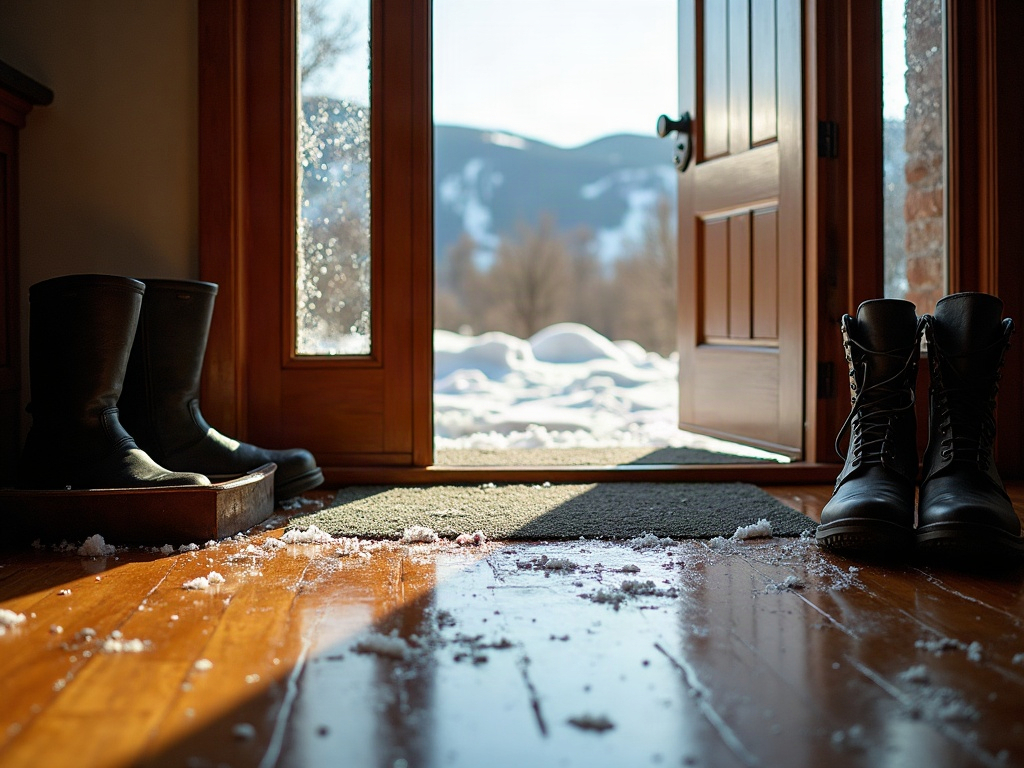
In Longmont, front range windstorms in spring and early summer push a significant amount of fine grit and pollen through doors and along entryway floors. Controlling what comes in at the door is more effective than cleaning what has already spread through the house. A quality door mat on both the exterior and interior of each entry door captures a large percentage of the debris before it reaches main living surfaces. Shake or vacuum both mats at least once per week.
A no-shoes policy in the main living areas, or a dedicated shoe storage spot at each entry, reduces the floor cleaning load for the entire house measurably. This is not about being precious about the floors. It is about the math of tracked-in grit and allergens that accumulate room by room once shoes carry them past the entry zone. For Longmont households managing allergies during the May through July pollen season, this single habit reduces the indoor pollen load more than any amount of after-the-fact vacuuming.
You do not need a full cabinet of cleaning products to maintain a home between biweekly visits. A small set of the right tools, kept accessible, handles the entire routine without requiring any setup time.
Microfiber cloths are the single most important tool for between-visit maintenance. Keep a stack of clean ones in each major room. A fresh microfiber cloth removes dust, grease, and surface residue from most household surfaces without heavy product use. Wash them regularly and do not use fabric softener. Fabric softener coats the microfiber fibers and reduces their ability to grab particulate.
A 50/50 diluted white vinegar solution in a spray bottle handles bathroom surfaces, shower glass, and light mineral deposit maintenance on faucets and fixtures. It is not a disinfectant, but it is an effective descaler for the slow-building calcium deposits that Longmont's water supply produces on every water-contact surface. Apply, let it sit for two to three minutes, and wipe. Do not use it on natural stone surfaces including marble, travertine, or limestone. The acid etches those materials permanently.
A plant-derived dish soap diluted in a spray bottle is all most kitchens need for counters, stovetop, and cabinet hardware between visits. We avoid recommending products with quaternary ammonium compounds for daily food-prep surface use in homes. Frequent application without thorough rinsing can leave a residue film that builds up over multiple applications. A diluted dish soap solution handles the same surface cleaning tasks on food-contact areas without that concern.
For carpet spot treatment, keep a bottle of enzyme-based cleaner accessible. Enzyme cleaners break down the proteins in pet accidents, food spills, and biological residue rather than just masking the odor. They are more effective on those stain types than general all-purpose cleaners, and they do not leave the sticky residue that some spray carpet cleaners deposit, which actually attracts new soil to the treated area.
If you want to understand how Colorado's dry climate affects the frequency and focus of your cleaning routine, the post on how Colorado's dry climate affects how often you should clean your home explains why Front Range homes need different maintenance intervals than what most guides written for humid-climate markets recommend.
The habits above keep a well-maintained home in good condition between professional visits. They do not replace what a thorough professional clean accomplishes, and knowing that boundary helps you understand what to prioritize yourself and what to leave for the crew.
Grout restoration, hard water scale that has built up over months on shower glass, interior oven cleaning, and behind-appliance floor cleaning are tasks that fall outside reasonable daily and weekly maintenance. Attempting them with between-visit effort either produces incomplete results or takes long enough that the time trade-off does not make sense. These are the tasks that a professional visit handles on a rotating basis for recurring clients.
There is also a category of deeper work that surfaces in Longmont homes seasonally. The spring wind events that push fine grit through window frames and along baseboards from March through May create a buildup that accumulates faster than the weekly dust pass handles. Our post on summer pollen season and your home covers what that seasonal layer looks like and how we address it on professional visits. For homes near the open space corridors north and east of Longmont, the post on why Front Range dust is different explains why the ambient particulate load is meaningfully higher than in other markets.
If your home has gotten ahead of the between-visit routine and needs a professional reset, the Casabella Longmont house cleaning page covers how we structure first-time and deep clean visits for homes in this area. For homes managing allergy symptoms alongside routine cleaning, the post on cleaning your home for allergies on the Front Range covers the specific product and technique choices that reduce indoor allergen load between professional visits.
You can reach us at 303-827-1251 during business hours to talk through what a recurring schedule looks like for your specific Longmont home. The post on the best time to start a recurring cleaning service is also worth reading if you are deciding whether now is the right time to get on a schedule. For a cost breakdown on what recurring service runs in this market, see our post on recurring cleaning versus a one-time deep clean.
The highest-impact habits are a weekly top-to-bottom dust pass in each room using a dry microfiber cloth, a daily bathroom wipe of the sink and faucet area, a stovetop wipe after each cooking session, and a dry sweep of hard floors every two to three days. Add one targeted deeper task per week on a rotation: baseboards one week, microwave interior the next, grout lines the week after that. This sequence takes about ten minutes per day and twenty minutes one day per week for most Longmont households. Done consistently, it keeps the home in a condition where a biweekly professional visit maintains a clean baseline rather than recovering from accumulated buildup. Our Longmont house cleaning page has more on how we structure recurring service in this area.
Longmont sits on the Front Range in a semi-arid climate where fine particulate stays airborne longer before settling than it would in a humid-climate home. Colorado averages around 330 sunny days per year and indoor humidity runs low, which means dust circulates and re-settles on horizontal surfaces within a few days of a cleaning. Homes near downtown Longmont, the Mountain View neighborhood, and the open corridors north of town also deal with a higher ambient dust load from wind-transported soil and agricultural particulate. A weekly microfiber dust pass on upper and mid-level surfaces is the correct response interval for most Front Range homes. Waiting until surfaces look visibly dirty means the fine layer has already been sitting there for days and has started to accumulate additional particulate on top of it. See our post on how Colorado's dry climate affects cleaning frequency for more context.
A squeegee pass on shower glass after every use removes most of the water that would otherwise evaporate and leave a mineral deposit. Longmont's water supply carries a measurable calcium and magnesium content, so every water contact on glass and fixtures contributes to buildup. A 50/50 diluted white vinegar spray applied to shower walls and glass twice per week, left for two to three minutes before wiping, dissolves the early-stage mineral film before it bonds into visible scale. Wipe faucet handles and the sink basin daily with a damp microfiber cloth to prevent calcium spots from building at the waterline. These habits take about two minutes per bathroom per day and prevent the heavier descaling work that becomes necessary when deposits are left untreated for several weeks. Do not use vinegar on marble or travertine tile. Use a pH-neutral stone cleaner on natural stone surfaces only.
For most active Longmont households, carpet should be vacuumed at least once per week between professional biweekly visits, and twice per week in high-traffic rooms or any room where a pet spends time. Hard floors need a dry sweep or vacuum pass every two to three days, and daily if pets are tracked in from outside. The filter on your vacuum matters in Colorado's dry climate. A HEPA filter captures fine particulate rather than recirculating it back into the room air, where it re-settles on surfaces within hours. Running a vacuum without a functioning filter in a Front Range home effectively redistributes the dust rather than removing it. For homes managing seasonal allergy symptoms, the post on cleaning for allergies on the Front Range covers vacuum selection and technique in more detail.
Grout restoration on tile floors and shower walls, interior oven cleaning, hard water scale that has built up over several months on shower glass or faucet fixtures, refrigerator interior cleaning including gasket channels and under-drawer residue, and behind-appliance floor cleaning are all tasks that fall outside routine between-visit maintenance. Attempting them with daily maintenance effort produces incomplete results or takes long enough that the time trade-off is poor. These are the tasks professional crews address on a rotating basis for recurring clients. Between visits, focus on the tasks that prevent buildup from forming rather than trying to recover the areas that have already accumulated significant residue. If you are not sure whether a specific area in your Longmont home is in the maintenance range or needs professional attention, book a visit online and we will assess the home before scoping the work.
Getting on a schedule that works for your Longmont home is straightforward. Visit our Longmont cleaning page to see how we approach recurring service in this area, or book your first visit online and we will confirm the scope and price before anyone walks through the door.