October 22, 2026

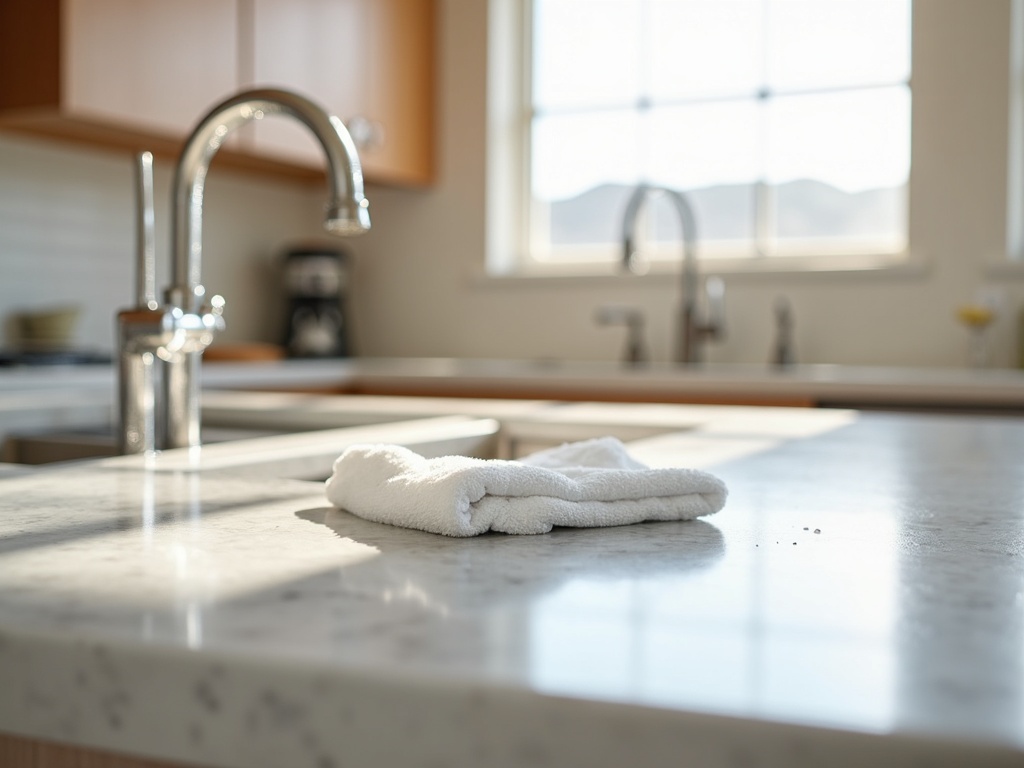
New construction in Erie Highlands and Vista Ridge has brought a lot of quartz countertops into the homes we clean. Over the past several months of running routes through Erie and the surrounding Boulder County cities, we have seen a consistent pattern: homeowners doing the wrong thing with quartz and not realizing it until the surface starts to dull, discolor, or pit in small areas that are hard to reverse.
Quartz is engineered stone, not natural stone. That distinction matters because it changes everything about how you clean it, what products you can use, and what you should never let near it. The cleaning rules that apply to granite do not fully apply to quartz. The rules for laminate do not apply either. Quartz is its own category, and treating it like something else is where most of the damage starts.
This post covers the most common mistake homeowners make on quartz, a step-by-step process for cleaning it correctly, the products and tools we use on quartz surfaces in Erie homes, and the point where DIY effort stops being worth it.
The most consistent problem we see is using the wrong cleaner in the name of doing a thorough job. Bleach-based sprays, undiluted disinfectants, products with high pH, and anything labeled as a heavy-duty degreaser are all damaging to quartz over time.
Quartz countertops are made from crushed stone bound with a polymer resin. That resin binder is what gives quartz its durability and its non-porous surface. It is also what makes it vulnerable to harsh chemicals. High-pH alkaline cleaners and bleach-based products break down the resin bond gradually. The surface does not fail dramatically or all at once. It gets slightly duller, develops small discolored patches, or loses the slight sheen that made the countertop look good when it was installed. By the time the damage is visible, it has been happening for a while.
We see this most often in Erie homes that were cleaned with the same products used on the previous home, which may have had tile or laminate counters that tolerate stronger cleaners without issue. The switch to quartz requires a product adjustment that not everyone makes right away.
Aggressive scrubbing with abrasive pads is the second part of this problem. The surface of quartz feels durable, and it is. But a green scratch pad used repeatedly on the same area will create micro-scratches in the resin surface that catch and hold grime more aggressively over time. Harder to clean, not easier.
Remove everything sitting on the counter. Wipe any standing moisture with a dry microfiber cloth first. Applying a cleaner over a wet surface dilutes it immediately and reduces its effectiveness. In Erie's dry indoor air, a counter that looks wet after cooking or washing often has a thin residue film underneath the moisture that a dry wipe reveals. Starting with a dry surface lets you see what you are actually dealing with before you reach for a product.
This step also matters because quartz countertops in active kitchens often have layers of residue rather than a single type of soil. Food debris sitting on top, oil vapor residue below that, and a mineral film at the base from water contact. A dry wipe picks up the loose top layer before the wet cleaning begins, which means the cleaning product contacts the actual residue rather than sliding over loose debris.
A few drops of standard dish soap in warm water, applied with a soft microfiber cloth, handles the majority of daily and weekly kitchen countertop cleaning on quartz. This is not a compromise. It is the correct tool for the job. Dish soap is pH-neutral, it cuts food grease effectively, and it leaves no residue film that builds up with repeated application.
Apply the soapy cloth to the surface and wipe in straight passes. Do not scrub in circles. Circular scrubbing concentrates friction on small areas and is harder on the surface finish than straight passes with the same pressure. After wiping, follow with a clean damp cloth to remove any soap residue, and then dry the surface with a second dry microfiber cloth. Leaving soapy water to air dry on quartz leaves a dull film that looks like a stain but is just dried soap residue.
Dried food stuck to quartz is the moment most people make the mistake of grabbing a scratch pad. Do not. Instead, dampen the area with warm water and let it sit for two to three minutes. Most dried food residue softens enough that a microfiber cloth or a soft plastic scraper removes it completely without any abrasive contact.
A soft plastic putty knife or a plastic bench scraper, held at a low angle to the surface, lifts dried food without scratching the resin layer. This tool belongs in every kitchen that has quartz countertops. For residue that does not fully release after soaking, a small amount of isopropyl alcohol applied directly to the stuck area and left for 30 seconds loosens most dried food and adhesive residue without harming the surface. Wipe it off with a microfiber cloth and follow with a rinse pass.
Cooking oil and grease residue that has been on the surface for more than a few hours bonds differently than fresh spills. Dish soap alone handles fresh grease effectively. For the oily haze that builds up around a stovetop, on the quartz surface adjacent to a range, or behind a toaster over time, a 70 percent isopropyl alcohol solution applied with a microfiber cloth and left for 30 seconds before wiping dissolves the oil bond without requiring scrubbing pressure.
Isopropyl alcohol is safe on quartz in the concentrations available at retail (70 percent). Do not use higher concentrations (90 percent or above) repeatedly. The stronger the alcohol concentration, the more contact time it requires to evaporate fully, and prolonged contact with high-concentration alcohol can affect the resin surface over time. Standard 70 percent rubbing alcohol from any pharmacy is the appropriate choice. Apply, dwell briefly, wipe clean, and rinse with a damp cloth.
Front Range tap water is moderately hard, and quartz countertops near sinks develop calcium deposits along the waterline, around the faucet base, and at the edge where water runs off the surface. These deposits look chalky and white. The instinct is to reach for a vinegar spray, which works on many other surfaces. On quartz, vinegar is a problem.
White vinegar is acidic. Quartz tolerates mild, brief acid contact without visible immediate damage, but repeated application of vinegar on quartz gradually dulls the surface finish. The resin binder is the target. Instead, use a product specifically formulated as a quartz-safe descaler, or apply a small amount of dish soap with warm water and a soft brush worked directly at the deposit with light pressure. For calcium buildup that has accumulated over several weeks, a paste of baking soda and water applied to the deposit and left for five minutes softens it enough that a soft cloth removes it without acid contact. Rinse thoroughly after any baking soda application.
Bleach disinfects effectively but it is among the most damaging products you can use on quartz. Even diluted bleach applied regularly breaks down the resin binder over time and causes the surface to discolor or lose its finish. In Erie homes with small children or after raw meat preparation, the desire to disinfect is reasonable. The solution is not bleach.
A 70 percent isopropyl alcohol spray applied to the surface and allowed to sit for one minute before wiping provides disinfecting contact time without the chemical damage bleach creates. Several commercial quartz-safe disinfecting sprays are also available. Method Daily Granite Cleaner works on quartz as well as stone surfaces and is pH-balanced. Read the label before using any commercial spray on quartz. If the product lists bleach, sodium hypochlorite, or a pH above 10 in the active ingredients, do not use it on quartz.
This step is the one most commonly skipped because it feels like extra work after the cleaning is done. It is not optional on quartz. Any cleaning product, including plain water, that is left to air dry on a quartz surface deposits whatever it contains as it evaporates. In Erie's dry air, water evaporates quickly and leaves the mineral residue behind fast. A final dry microfiber pass after every cleaning step removes that residue before it dries and keeps the surface looking the way it did when it was installed.
Keep a dedicated microfiber cloth within reach of the countertop for this final wipe. Dry the surface in straight passes from the back edge toward the front. Thirty seconds per countertop run. This single habit, done consistently after every cleaning, prevents most of the surface dullness and water spot accumulation that homeowners attribute to the countertop aging when it is actually just dried residue that was never wiped off.
Microfiber cloths are the correct tool for every step on quartz. We carry them in two types: slightly damp for cleaning passes and fully dry for the finish wipe. The electrostatic charge in microfiber lifts fine particulate and grease film without the scratching that cotton rags or paper towels create over repeated use. Paper towels specifically leave micro-fiber residue on quartz that contributes to the dull haze homeowners sometimes notice.
For our primary cleaning solution on quartz surfaces in Erie kitchens, we use diluted plant-derived dish soap, not the quaternary ammonium-based surface sprays we use in bathrooms. Quartz countertops are food-prep surfaces. Products that leave a residue film after drying have more of an issue there than on a bathroom vanity, which does not contact food directly.
We do not use Windex or any glass cleaner on quartz. Many glass cleaners contain ammonia or alcohol at concentrations that affect the resin over repeated use. On glass, that formulation is fine. On quartz, it is the wrong product for the same reason bleach is: the surface binder is the vulnerability, and cleaners formulated for non-porous glass do not account for it.
For stubborn adhesive residue (price stickers, tape residue from renovation painters tape, or adhesive from appliance feet), Goo Gone is safe on quartz when used in small amounts and wiped off fully within two minutes. Do not let it dwell longer than that. It is a solvent and the resin surface does not benefit from extended solvent contact.
One product worth mentioning for Erie homeowners: Weiman Quartz Countertop Cleaner and Polish. It is formulated specifically for engineered stone, pH-balanced, and adds a light protective finish that slows water spot and minor residue accumulation between cleanings. We use it as a finishing product on quartz after deep clean visits rather than as a daily cleaner. Applied once a month, it maintains the surface appearance without the product buildup that conditioning sprays used daily can create.
The steps above handle routine and periodic maintenance cleaning for quartz countertops in good condition. There are situations where the scope is beyond what a DIY approach addresses effectively.
Discoloration from repeated bleach or high-pH cleaner exposure is not reversible with cleaning. The resin surface has been chemically altered. At that point, you are dealing with a countertop refinishing or replacement question, not a cleaning question. If you have been using the wrong products for months and the surface looks dull or has discolored patches, a professional assessment of the surface condition is the right next step, not more cleaning product.
Deep staining from red wine, turmeric, or strongly pigmented foods that were left on the surface for hours sometimes requires a commercial quartz stain remover applied by someone who knows the correct dwell time and technique for the specific stain type. Attempts to scrub these stains with pressure spread the pigment deeper into any micro-scratch channels in the surface rather than lifting it. Our crews see this in homes that had a significant spill between visits and tried to address it themselves before we arrived.
When the quartz in a home has been through a renovation or construction project in Erie's newer neighborhoods, post-construction residue from grout, joint compound, and construction adhesive sometimes bonds to the counter surface. That material requires specific techniques to remove without scratching the quartz. It is not a standard cleaning task. Our post on cleaning after a renovation before you move back in covers this situation in detail.
The biggest factor in how long a quartz countertop maintains its appearance is not the frequency of cleaning. It is whether the right products were used from the start. Homes that have been cleaned with the wrong products for a year look noticeably different from homes cleaned correctly for the same period, regardless of cleaning frequency. Starting with the correct approach protects the investment in the countertop. For homeowners in Erie who want to understand what a professional visit covers for kitchen surfaces specifically, our Erie house cleaning page outlines how we structure kitchen cleaning as part of both deep clean and recurring maintenance visits.
For homes that have hard water buildup on quartz alongside the other surfaces it hits (fixtures, glass, tile), our post on dealing with hard water stains in Colorado homes covers the broader picture of how Front Range water chemistry affects every water-contact surface in the house, not just countertops. Understanding the quartz-specific limits within that broader context helps homeowners address each surface with the right tool rather than applying one approach to everything.
For context on what professional cleaning costs for an Erie home, including what drives price differences between homes of similar size, our post on how much house cleaning costs in Erie walks through the pricing variables clearly. The biggest factor in a cleaning quote is not square footage. It is the number of bathrooms, pets, and how long it has been since the home was last professionally cleaned.
If you are considering adding recurring professional service to keep quartz and every other surface in your home maintained correctly, the post on recurring cleaning versus a one-time deep clean compares the two approaches on cost and scope. And if you are managing the question of hardwood floors in the same home alongside quartz countertops, the post on what most people get wrong about cleaning hardwood floors is worth reading since the same category of mistake, using too-strong products in the name of doing a thorough job, applies to both surfaces.
You can reach us directly at 720-613-5419 during business hours to talk through what your Erie home needs before we put anything on the calendar. When you are ready to move forward, you can book your first visit online and we will confirm the scope and price specific to your home before anyone arrives.
The most effective daily approach for quartz countertops in Erie homes is a few drops of pH-neutral dish soap diluted in warm water, applied with a soft microfiber cloth in straight passes, followed by a clean damp rinse cloth and a final dry microfiber wipe. This combination handles food residue, light grease, and everyday kitchen grime without affecting the resin binder that gives quartz its durability. For stuck-on food, soak the area with warm water for two to three minutes before wiping rather than reaching for an abrasive pad. A soft plastic bench scraper removes dried food from quartz without scratching. The dry microfiber finish pass is not optional in Erie's dry air. Water and cleaning products that air dry on quartz leave a residue film that builds into the dullness homeowners often attribute to the countertop aging. Our Erie house cleaning page covers how we handle kitchen surfaces during professional visits in this area.
The cleaners that cause the most damage on quartz are bleach and bleach-based sprays, undiluted disinfectants with sodium hypochlorite, high-pH alkaline degreasers, white vinegar used regularly, Windex and ammonia-based glass cleaners, and abrasive scrub pads or powders used directly on the surface. Quartz is engineered stone with a polymer resin binder, and that resin is what these products attack over time. The surface does not fail all at once. It gradually dulls, develops discolored patches, or loses the finish that made it look good when installed. Bleach is the most common offender because homeowners use it for disinfecting and do not realize it affects quartz differently than it does tile or laminate. A 70 percent isopropyl alcohol spray provides disinfecting contact time on quartz without the chemical damage bleach causes. Method Daily Granite Cleaner is also appropriate for quartz and is available at most grocery stores.
Hard water deposits on quartz countertops near the sink are a consistent issue in Erie and across the Front Range because Colorado's municipal water supply carries measurable calcium and magnesium content. The correct approach on quartz is not vinegar, which is the standard solution for hard water on most other surfaces. Acid cleaners like vinegar gradually dull the resin surface with repeated use. Instead, make a paste of baking soda and water, apply it directly to the calcium deposit, and let it sit for five minutes. The baking soda softens the mineral bond without acid contact. Wipe with a soft cloth and rinse thoroughly. For deposits that have accumulated over several weeks, a product specifically labeled as quartz-safe and formulated for mineral deposit removal is the right tool. Weiman Quartz Countertop Cleaner handles light to moderate hard water residue safely. A dedicated daily dry wipe of the area immediately around the faucet base prevents deposits from building in the first place.
Neither vinegar nor bleach should be used on quartz countertops for routine cleaning or disinfecting. Bleach breaks down the polymer resin binder in quartz over time, causing dullness, discoloration, and surface degradation that is not reversible with cleaning. White vinegar is acidic and has a similar, though slower, effect on the resin surface with repeated application. Both are effective on the surfaces they were designed for, but quartz is not one of them. For disinfecting quartz in Erie kitchens, the correct product is 70 percent isopropyl alcohol. Spray it on the surface, allow it to sit for one minute for adequate contact time, and wipe with a microfiber cloth. Several commercial spray disinfectants are also formulated as pH-balanced and bleach-free. Check that any commercial disinfecting spray lists a pH below 10 and does not contain sodium hypochlorite or ammonia before using it on quartz.
For most Erie households on a recurring cleaning schedule, quartz countertops receive professional attention on every visit, whether that is biweekly or monthly depending on the home's use level and family size. Professional cleaning matters for quartz specifically because it ensures the correct products are used consistently, which prevents the gradual resin damage that wrong-product DIY cleaning causes over months. Homes in Erie Highlands, Vista Ridge, and Compass that are newer construction frequently have quartz in multiple rooms including the kitchen, bathrooms, and laundry room, all of which benefit from the same careful product approach. For homes that have been cleaned with the wrong products for a period of time, a professional deep clean visit that assesses the surface condition first is the right starting point. Post-renovation quartz cleaning in Erie's newer neighborhoods also requires a different technique because construction residue bonds to the surface differently than kitchen grime. See our post on cleaning after a renovation before you move back in for that specific situation.
Ready to have your Erie home cleaned correctly, including every quartz surface in the kitchen and bathrooms? Book your first visit online and we will confirm the full scope for your home before anyone walks through the door.